

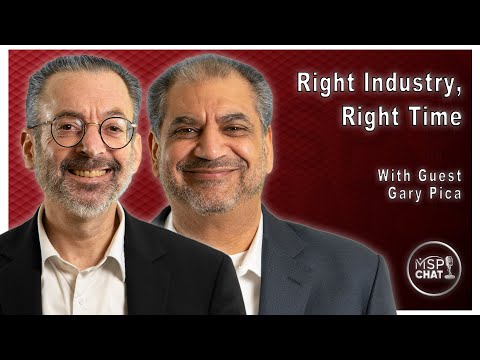
Listen to the podcast
Read Transcript
Erick and Rich discuss what Kaseya buying INKY says about the strategies stand-alone security vendors must embrace to remain competitive in the future, and why stand-alone MSPs competing with rollups should employ those strategies too. Then they’re joined by legendary MSP guru and Kaseya Chief Community Officer Gary Pica for an insightful exploration of the past, present, and future of managed services. And finally, one last thing: why the only bad time to in a Nobel Prize is in the middle of a digital detox.
Discussed in this episode:
Kaseya Acquires Leading AI-Powered Email Security Provider INKY
Nobel committee unable to reach prize winner who is ‘living his best life’ hiking off grid
Some guests on this podcast are clients of Channel Mastered. Compensation plays no part in their appearance or the content of the discussion unless the episode they appear on is a “bonus episode” explicitly labeled as sponsored.
Transcript:
Rich: [00:00:00] And 3, 2, 1. Blastoff, ladies and gentlemen, welcome to another episode of the MSP Chat podcast. Your weekly visit with two talking heads, talking with you. About the services, strategies and success tips you need to make it big and manage services. My name is Rich Freeman. I’m Chief analyst at Channel Mastered, the organization responsible for the show.
I’m pleased to be joined with you side by side today, in person with our CEO and chief strategist at Channel Mastered. His name is Erick Simpson. Erick, how you doing? Doing pretty well, rich
Erick: and yeah, it’s a pleasure. Whenever we get to do the show, live well live in person, not live virtually how we need to do it when we’re in different places around the [00:01:00] world.
Won’t you let people know where we are broadcasting from today?
Rich: And this makes it even better. We’re in Miami, sunny, wonderful Miami, Florida. We are attending the DattoCon conference that’s taking place right now as as we record this. And in fact, some news coming out of that show is is what we’re gonna be talking about.
But it’s been a good week. It’s been a great week. So far. Yeah. Let’s go ahead and dive into our story of the week and it’s really some of the implications of that story of the week that I wanna focus on. But just to set things up a little bit, the probably biggest single news announcement made during the Dacon shows that Kaseya has acquired Inky inky, for those who don’t know, is an email security vendor.
Very AI. Forward, on the leading edge of technology with some of the other more advanced email security companies out there. I would say, Erick, one of the things I’ve discovered at the show that I probably should have known but didn’t is that a lot of Kaseya partners were not terribly big fans.
Graphis, the email security solution that Kaseya has been leaning on up [00:02:00] until now. They were looking for something more robust. This fills that gap. They Kaseya is bundling the inky solution into the Kaseya 365 user package at no extra cost. So basically, if you’re a subscriber to that service right now, instead of.
Getting the graphis or in probably in addition to getting the graphis email security solution. With that, you are now getting Inky solution. You’re not paying anything more for that. And obviously if you become a new subscriber for the same price you would’ve paid before, you’re now getting AI heavy.
Email security. The significance of this the sort of bigger picture significance is it speaks to this trend that we’ve talked about many times on the show. The gravitation in the IT world and the managed services world. Toward platforms and specifically security platforms. Inky was a standalone email security company.
They chose, and I’m meeting by the way a little bit later with this, their CEO. It’d be interesting to get his perspective on why he [00:03:00] made this choice, but they chose to sell to a platform company and in this case, in K’s case, a managed services platform company that does a number of different things in security and backup, but also.
R-M-M-B-D-R and so on. Increasingly MSPs end users are looking to get more of what they use, particularly in security from fewer vendors. And so there is this trend towards security platforms. And as I was thinking about it, Erick, I was thinking about what does the future look like?
We’ve been actually talking about this recently with one of our clients at at Channel Mastered. What does the future look like for a security vendor that is not part of a security platform or a managed. Services platform Kase or Connect Wise’s platform. And it got me thinking a little bit about what the future looks like as well for an MSP that’s not part of some big roll up and it, that is going it alone.
There is a way forward both for the [00:04:00] the standalone MSP, the smaller MSB, if you will, and the standalone security vendor. But it is one that’s gonna require some change. And it, I want to talk about some of the parallels there a little bit. First thing, and this is an insight that you’ll hear in more detail a little bit later on the show.
Later on the show. We will be speaking with Gary Pika, chief Community Officer at Kase about a number of different things. But at one point in that conversation, you’re gonna hear him talk about what MSPs need to do to remain competitive against these giant roll-ups. And one of the things he will say is.
You’ve gotta really isolate and identify the thing that you are best at that is most profitable for you. What’s that vertical industry? If your customer base in general is delivering X percent margins, what vertical industry, what sub-vertical industry delivers x plus 5% and go all in on that’s gonna be part of how you get through this similar kind of thing for a security vendor.
So if you are an email [00:05:00] security vendor say. What is the specific aspect of email security that you are unusually good at? Identify what that is and its relationship to your profit model. And go all in on that because that’s gonna be the thing that can keeps you relevant in a market where platforms are winning.
Look for markets out there that the platforms maybe don’t serve as well as you can. So this is another thing Gary, we’ll talk about with us in a little bit. You’re gonna see these larger MSP roll-ups go after a large swath of the market, but there are gonna be smaller SMBs out there that aren’t really worth their while.
There’s plenty of money to be made there. So look for those pockets of demand for managed services that the bigger guys maybe aren’t that interested in. And similarly, if you are a standalone security vendor look for markets and segments that the platforms don’t serve as well as you do.
If you have some particular [00:06:00] strength in regulatory compliance, for example, that a genErick, more genErick security platform can’t serve. Then you’re gonna wanna kind of zero in on that a little bit. Another thing, but for a vendor and for an MSP you don’t have to go it alone.
You don’t necessarily need to sell into a platform or into a roll up. But making friends is always an option. You can partner with other partners, or if you’re a vendor, you can partner with other vendors. Find that one plus one equals three kind of formula that allows you to retain the ownership and control that you want, but enjoy some of the advantages of scale that that the platform folks enjoy.
There again you are not doomed by any means. If you are a smaller MSP who wants to remain that way, and you are not necessarily doomed if you are a standalone security vendor, but you must acknowledge in both cases that there are some pretty serious competitive [00:07:00] headwinds coming your way.
And you’ve gotta figure out what that means for your business model and you’ve gotta adapt to that if you do. You can have a very healthy business for many years to come. If you don’t, that’s when you are potentially in a lot of trouble.
Erick: I love those tips, rich. And what you’re really defining is, finding your.
The, whether you’re a vendor and it’s gonna roll into my tip of the week, interestingly enough, ’cause we’re gonna talk about some similar themes here. But finding that, that special quality that you have that can distinguish and differentiate yourself from your competitors. And, the, there’s lots of routes to market, right?
So you can go, you direct build, build a great brand name for yourself, whether you’re a vendor or an MSP you can. Partner, like you mentioned, and when we work with clients at Channel Mastered, we look at these different routes to market, whether it’s a direct model, whether it’s an indirect model through MSPs or MSPs, whether it’s a an integration vendor relationship [00:08:00] where we can integrate those solutions together and then, benefit from the expanded value of that now growing portfolio or platform of services.
Or that could just be, a complimentary affinity relationship where you’re a a handful of complimentary vendors that get together to promote and market together to reduce the overall costs and to leverage. The increased exposure and marketing capabilities of everyone in that complimentary vendor group.
We see this a lot when, in, in these days with like roadshows when there’s multiple vendors getting together and doing that kind of thing. And then ultimately there’s distribution. Whether you’re a vendor or an MSP, and I’ll pivot to the tip of the week when you’re ready, rich, because like I said, this is an overarching umbrella philosophy that serves.
No matter what kind of business you’re in, there are some parallels and some really key takeaways that I’m looking forward to sharing.
Rich: Without further ado let’s pivot tell folks what the particular [00:09:00] challenge is, where you wanna apply that philosophy. Alright,
Erick: ready? Alright, so here’s how I’m gonna, tie things together.
So the challenge now, rich, which is much more, much greater of a challenge than when I had my MSP. But even then, after a few years of building my MSP practice, early days when we were, helping champion the model and lots of other IT providers were moving into the model, is this.
Kind of the competitive nature of the growing number of MSPs, the saturation, I would say specifically from a geographic perspective, like if you’re an Ms. P today, 10 years ago, you probably had less competition in your service geography, let’s say, than you do today. Now, a lot of MSPs Rich have expanded beyond that by saying we’ll sup support.
Folks outside of our geo, typically when, maybe the home office is in our geo or maybe there’s a satellite branch office in our geo, and then we can land and expand into other geographic areas and provide remote support. [00:10:00] And especially with cybersecurity, you have to roll trucks typically for that kind of service.
So what do you do when you find yourself in a very saturated market? And we talk a little bit about this on the program before Rich, but it’s since you’ve led the discussion with kind of what vendors can do it, there’s parallels here. So number one, it’s the same thing. That you shared, you have to find your unique differentiator.
If you don’t have a unique differentiator, then you should try to niche down into a specific vertical market. Maybe you have more clients that are attorneys or accountants or something than the other clients. Something that you know more about that business model that allows you to connect better with new prospects in that same vertical market or that business model.
Like when we were MSPs rich. Attorneys, accountants, nonprofits. Those were our three key vertical markets, and we knew the pain of [00:11:00] every single one of those businesses. We knew attorneys back in the day when aging myself, so there was no over the air updates of any of their software. They were sending these CV ROMs.
To the attorneys. And then it was our job every week or two to sit there and up update all the forms and, the legal documents and all that, if so these were the sneaker net days. We knew the pain of that. We would m. Market specifically to that pain.
And it would resonate with our attorney clients. We knew how valuable email was to them. Same thing with accountants. We knew that there were two times in the fiscal year where we could not do any work, but we had to make sure that those businesses operated because it was tax time from personal taxes and corporate taxes.
And we understood that and we understood what those accountants needed in order to grow and support their clients. Nonprofits, as well. So we had very specific insights and how to get them really good pricing on Microsoft licensing, because nonprofits, there was a [00:12:00] specific distributor that we could get really cost effective licensing and that kind of thing.
So niche down and find your ideal essence that you can outperform any of your competitors with and market heavily that way. Now tip number two. I’m a, I am a very strong advocate for thought leadership. I think this is the best way to win the confidence and trust of your target audience.
This is how you build credibility. If you know something that you can share with your target prospect audience your customers that are running these businesses, put on webinars, invite them to these webinars. Do lunch and learns, do business breakfast. Connect with them in a newsletter that isn’t all salesy.
Give them things that they are concerned about. If there are things that are changing in the legal industry and the healthcare industry security, these are things that I think are relevant that you can use [00:13:00] to build your credibility and trust and make it easier to set appointments with these folks and make it easier to win business away from the incumbent.
Competitor that is typically serving that client as well. And here’s the one that really hits home with what we were talking about in, in, in this partnership philosophy, right? So when we had our MSP Rich we created this spreadsheet we called the Client Solution Roadmap. And what we did was we listed all of our clients down, the A column, right?
And the A column. And then across the top, the rows were every single. Product, service or solution that business owner would need in order to run their business, whether we delivered it or not. So there was, accounting accountants in there. There was, landscapers, there was, the folks that would come in and clean the office at night.
So we built all these relationships and moving companies were one of our biggest referral sources. So we knew. How to partner with all these ancillary service businesses that serve those same clients. And we would do the same thing. We would put [00:14:00] together, some messaging we would do some trainings and workshops and things like that to give business owners an idea of what does a best in class business owner need? How do we alleviate their pain? And then we would defray the cost of that and we would share leads, which was the most important thing. So again, it’s one of those things where you can do it alone and try to do it, it’s gonna cost you a lot more time, energy, effort, and money.
To market and distinguish yourself. But if you have a team of folks that are all delivering services to those same customers, then that creates a, a very effective kind of top of the funnel lead generation opportunity for you. And then we did, some revenue shares and things like that to make it worthwhile for everybody.
Some thoughts.
Rich: Three very solid recommendations there. I really wanna underscore the second of them though and just point out. Thought leadership, being a thought leader online or at lunch and learns, live events and so on and doing that. In a non-salesy kind of way, you’re not talking about [00:15:00] yourself, you’re not promoting yourself.
You’re putting information out there about cybersecurity or AI or whatever it is that your target prospects will find useful and relevant. And I think what I would just point out is this is a process, right? This is not a lead generation campaign where two, three weeks in, you can measure well, how, how much business did I get out of what you’re doing?
Is on a continual basis making a reputation establishing some brand equity and some awareness for yourself in the marketplace as a thought leader because the people you eventually do business with may not be looking to change. MSPs may not be ready to change. MSPs may not be ready to sign their first MSP contract.
The day will come when they get unhappy, maybe with their incumbent or it’s renewal time, and they’re gonna think about who do I know? You know who, who’s out there, who I should talk to? And your name is gonna be the first one that comes up because you are constantly adding [00:16:00] value and sharing expertise with them.
So this is something you should be doing continually and you should just understand. It’s an ongoing investment that pays dividends over time, not overnight. That’s a great
Erick: point, rich. You’ve gotta stay the course and you’ve gotta be relevant, right? And you’ve gotta adapt with the changing conditions.
There’s news that happens, every month, every week, every day. That is important to the prospects and customers that you serve today. Another great opportunity is to speak at conferences and other events where your. Prospects congregate. So if you look at the calendar, if you’re, serving attorneys and accounts, figure out where, what those events and conferences are, and get on the list as a speaker, put together a great presentation that, again, is not salesy or anything like that.
If you know another great tip that served me very well, rich, was, write a book. Just, it’s not for everybody. But boy, oh boy, it is one of the best calling cards to launch your [00:17:00] perception in your industry as a thought leader when you’re writing a book or partner with somebody else to write a book, right?
And deliver that as your calling card and give it away for free. Make it downloadable on your website. Gate it, so you’re capturing those leads. Deliver it to prospects when you’re having sales meetings. It’s a differentiator. A couple extra bonus tips there,
Rich: rich. And guess what, folks, there are more tips where those came from headed your way.
Just moments here. ’cause we teased the fact that we have an interview with the great Gary Pika for you on this episode of the show. Erick and I are gonna take a break now. We come back, we will be rejoined at this very table in this very room. For those of you watching on video by Gary Peak of the Chief Community Officer Sase, to talk about a number of different things.
I think. You’re gonna enjoy this and get a lot of value out of it. So stick around. We’ll be right back.
And welcome back to part two of this episode of the MSP [00:18:00] Chat podcast, our spotlight interview segment, coming to you from the Kaseya DattoCon event in Miami. And we are. Extremely pleased to be joined by the man, the myth and the legend. Gary Pika. Nice to see you guys. Good to see you, Gary. Yeah. Awesome.
I can’t believe I’m gonna do this. It says I need to do this on my notes here. Normally at this point in the interview, I ask somebody to tell folks who they are and what they do. I think everybody knows, but for the one person in our audience who doesn’t tell them a little bit about yourself. So
Gary: my introduction’s 30 minutes.
Do we have enough time for that? Do you know why? Because it. Like you guys hanging around for 30 years. But the Reader’s Digest version of my background is I’ve owned and operated and sold two MSPs, started true methods, trained nearly 10,000 MSPs around the world. Built my IT process, the industry’s first VCIO software platform.
And at Kase we’ve built the industry’s largest peer groups, tro peer with a thousand members [00:19:00] on three continents. And I do some board work and start up investing, but pretty much everything revolves around the space that I love and the people in it that I love. You can drop your mic now
Rich: our mutual friend, I’m sure Dave Sobel as well. He does the Business of Tech podcast these days. He has this great episode he did recently where he says, if I was still an MSP, here’s what the, here’s what my AI practice would look like. What would your AI practice look like if you were still an MSP?
Gary: Yeah, so we talk a lot about this because, as a peer group, we have to move there together, right? So talking about it and. I’ll base it on what I’ve seen, success and failure. I think getting started is one big thing and so people are nibbling around the edges with things like, copilot.
But what I’m encouraging people to do, I think the real value still ahead of us and we need to prepare. And the way we prepare for it is [00:20:00] having deeper conversations with every customer, really understanding their business, asking questions about. All the applications that they use and what’s important and how they interact.
And if you do that with 5, 10, 15 customers, you’ll start to get pattern recognition about where those common things are that we can go in and solve. Because just teaching them AI or how to leverage copay or the security around it is great. But the real value was when we unlock how to get involved in how they do their business and.
I’ve said from stage someone is gonna do that. For SMBs, it will be us or it will be someone else and I really want it to be us. But anything else, there’s some precursors. Just like there was with security, the people that have done the best are the ones that secured themselves first, and so we need to [00:21:00] run AI first businesses, not just in support desk ticketing, but in all aspects of our business.
We need to be the experts so that when we’re talking to our customers, that’s the place that we come from, and I think that’s really important.
Erick: Yeah. Put your mask on first. Eat your own caviar. Yep. Make all the mistakes on yourself first before you try to do it on your client’s time and their risk.
So for the best,
Gary: MSPs security is a culture. It’s how they view everything. Everybody views For a security and compliance lens, we need to do the same thing with AI and automation. It needs to be our culture and everyone needs to view things from that lens. ’cause once you get there. Taking things to your customers becomes so much easier.
It’s not like a package you design and a salesperson goes out and sells.
Erick: So Gary, you were part of the m and a symposium here yesterday during Autotask Community Live the pre-day event. Let’s give us some real perspective around [00:22:00] where. The landscape is right now for MSPs and emanate because depending upon where you look or what you listen to, there’s a lot of differing opinions and things like that.
Where do you see the landscape today and what’s the opportunity for these MSPs? So here’s
Gary: the message that I would send. You hear these people come out and talk about like crazy multiples and whatnot, and every Ms. P, big and small, whether they have a good business or bad thinks that’s the expectation.
Like I, they come to me and I feel like I’m the crusher of dreams. When I gotta tell ’em the reality. And the reality is. Y you need to understand the m and a, the m and a landscape. You need to understand based on where you are and where you think you can get to, and the attributes of your business, who potential buyers would be, and how those buyers value a business like yours.
And it’s much different for, a genErick MSP who has, 400,000 of EBITDA is looked at much differently than an MSP that has a million or a million and a [00:23:00] half and has some verticals. It’s literally two different worlds of who would acquire you and what they would pay for it.
When I hear people on podcasts giving these genErick answers, telling people what their business is worth living in it every day, I, I wanna jump into the screen and say, don’t tell people that you’re sending ’em on the wrong way, but everybody needs to spend time on it. And I tell people a good company to own is to sell, is a good company to own.
So we should all be trying to maximize our enterprise value, even if we’re on plan on selling our business. Every business owner should think that way.
Erick: Yeah. I’ve been that guy to tell some of these MSP owners like well. You think your company is worth more than it actually is? Yeah. Here are the things you need to focus on.
Gary: The other thing I said yesterday from stage was I see this mentality where people, two things. One, I’ve known ’em for 10 years. And they don’t, they’re not gonna sell because they think their business is gonna double in the next three [00:24:00] years, and it’s never gonna happen. I, ’cause I watch what happened like every quarter before.
So that kind of false hope is one thing. And the other thing is they feel like I’m gonna run it for two years or four years and I’m gonna sell it like in this year. And I. You can’t say that. Like we have no idea what’s going to, whether businesses will be, any business will be sale saleable and what the market will be for it three years from now.
A million things out of our control with macro eco economics war. There’s a million things that we’ve seen happen in our time, in this. And I was involved in one, like I sold my first MSP and then we were trying to get to the second exit with Mindshift, and 2008 came. I got a good chance to start true methods at that time, but that deal didn’t end up getting done with Best Buy until January of 2012.
So if you’re running your business, you have to take into account that you can’t make assumptions for what will happen then. [00:25:00]
Rich: There was an a report from the analyst organization, tech aisle yesterday that was had some interesting data, and I’m quoting from the report. Two years ago, only 14% of MSPs were looking to external capital for growth.
Today that number has nearly tripled to a staggering 40%. So from 14% looking for external capital for growth to 40% now in a two year time span. There. What, first of all, does that square with what you’re seeing? Nope. No. Okay.
Gary: 40%. There’s a lot of MSPs out there. I work with a thousand of ’em in Pier.
I can tell you that 40% of them aren’t looking for capital. I agree. Directionally more Ms. There are more MSPs to become larger or super regionals that are taking on investment, becoming platforms, looking to partner. So I do think the number is up, but I, that doesn’t, do you agree? Yeah. Seems
Erick: that’s a big number.
Yeah, it seems big. That’s, 10 more percent, it means half of all MSPs are looking for capital. So I, [00:26:00] yeah, it’s interesting that reporting, but I’ll I’ll go with the direction on it. ‘
Rich: cause I do think it’s, and directionally speaking, I guess one question would just be how.
Strong is that current, moving in that direction, but also what’s driving that? Is it just that there are bigger MSPs reaching a stage in their evolution where they’re looking for a source of capital? Or is there something about the rise of these roll-ups that has more MSPs looking to get involved in that?
Gary: The buzz? So I think it’s a combination of both. I think that everybody who’s not in the business yet. That has, I think it’s money driven. So I think there’s a lot of money that likes a lot of the characteristics of the space, and that’s why we have the platforms. I sit on the board of a couple of them and I think once they get in it, they realize how hard the business is.
But it’s a good investment. And so I think that’s what drives it. And one thing that I tell people to be careful of, and I’ve had a couple people come to me and I tell our members, if you’re thinking about selling, always come to [00:27:00] me. You know what I mean? Let’s, I’ll always make time for you to talk about it.
And they’re looking at what they want to do and they’re like, Hey, I think, we have these people coming to us and they want to invest and gonna be a platform. And what I tell ’em is, man. Unless you’re pretty big, like more than 15 million. If you’re smaller than that, you pro like without hurting your feelings.
I don’t know how qualified you are to do that next job. Like your current experience almost doesn’t help at all with buying, integrating, and scaling. An integrated company like that. And what you don’t want to do is not take all your money off, have this big investment that someone else has some control over.
And so I would just, I would tell people to be, I’m not saying what you should or shouldn’t do, but I would tell people to be cautious and make sure they’ve talked to people that have done it or they’ve talked to industry folks who have watched it, turn out or not turn out before they do that.
But [00:28:00] it’s. Again, my message is it’s not as easy as it seems, and you might be able to take some of your cash flow that you have and just double down on your, organic growth and maybe have more control, less risk, and a nice chunk of the valuation.
Erick: Gary, whether we agree that it’s 40% or 25% or 80% for the.
Partners that are in that motion, they’re kinda looking for, to be acquired or looking for something like that. What would you give them from a perspective of, look, here’s the options that you should consider, and then maybe some tips on identifying the right acquisition partner.
Gary: Yeah, so one is, you should know the landscape, right?
So there’s probably. There’s 90 different platforms, but there’s probably 10 that everybody you know should know. You should get to know those people. Come to conferences like this, [00:29:00] and you should get to meet those people and really understand what’s different about them. Because they’re much different.
Whether they’re a buy and hold, whether they have role. When I say role, co-investment, into the deal. ‘Cause that a lot of times that’s what makes it attractive is that you can get some upside on the deal. The second bite of the apple later. Yeah. But then you gotta understand, are you getting Class A shares?
Look at the company. Are they using debt? Or are they using equity? How are they positioned? So there’s a lot of homework that you need to do, and then think about what’s important to you, like opportunity for your team. You’d like to stay and work in the business, you’d like to leave immediately, you’d like to have a transition period.
So all of those factors of what you want and how you look at a deal will narrow down the field to just a couple. Regardless of where you end up, there’s a couple that fall into each of those categories. Do the work to be able to understand those things and be educated. And I think that’s more important [00:30:00] than even putting your book in your finances together.
’cause I think you can make a lot of the choices, not waste a lot of time. And when you do that, you’re attractive to someone you’ve thought those things through. You’re gonna optimize that deal. Does that make sense? Makes perfect sense.
Rich: Erick’s question is about the person who is thinking they might want to sell.
To somebody else and how to evaluate your options there. My next question is about the person who doesn’t wanna sell, but will have to compete with these much bigger MSPs regional, national, down the road. What’s your advice to the smaller Ms. P who wants to go it alone and needs to remain competitive?
Number one,
Gary: no. Who you can help, right? So that ideal customer profile. Know who you are and where you live and stay there. So [00:31:00] if where your best is companies that spend, three or 4,000 a month with you, don’t go searching those $30,000 deals that you’re not as good at. Like you need to be where you have your best competitive advantage.
So that’s number one. It can change and migrate over time. Two. Think about for that, the kind of services you need to be offering in a year or two to stay competitive. ’cause all the platforms, they’re making those investments, they’re making big investments in ai. They’ve made big investments in security.
So you need to make sure that you’re protecting and you can be as valuable in a couple years. Within those group of customers that you want to own. ’cause remember, as these companies scale, you get to a hundred million, 200, 300 million, you really, it’s hard to deal with customers that aren’t spending 4,000 a month.
So there’s a big swath at the bottom that you can live off of that are pretty good [00:32:00] customers, to live off
Erick: of. Gary, we talked at the beginning a little bit about ai. We know that, the biggest risk that MSPs have supply chain has, certainly their customers have, is in security.
We promote, leading with security First, how would you guide an MSP that is looking at the opportunity for ai? Along with security, to me, they’re connected. At some point you have to have, you can’t have one without the other, but. So a lot of MSPs are like jumping onto this AI bandwagon without kind of maybe thinking about shoring up the security and their risk and their customer’s risk.
What kind of insight would you share?
Gary: Let’s start with the MSP that they today need to have. Rules and compliance about this, the impact. And they don’t like, everybody’s using personal GPT accounts and they’re into their data and [00:33:00] like it’s a free for all. Yeah. Now it’s worse with customers.
They really have an issue. But you gotta start with yourself about start setting those rules and what your strategy is going to be like. What are you trying to get as the result from AI today in your operation, in your gen further business and. But there’s not great tools. We’re starting to see startups now around AI security, but it’s gonna take time, for that to happen.
So I think. Having discipline and having become part of your process. But we’re gonna have more risk. Like we already have more risk from it than we did before. And again, until you do that, it’s hard to go to a customer and tell ’em the risks that they have. And look, I think that’s one big thing about where Kaseya is headed.
Like what you heard on stage today from the beginning was why Kaseya 365 was built. And I think for a lot of MSPs. Having it built and secured and delivered to them [00:34:00] in a way that they could consume it is how the majority of the market is going to have to get there. ’cause they just don’t have the r and d dollars for every one of them to figure out.
Now there’s some, we see ’em doing it already, but that’s 10% of the marketplace. And then as the tools get better, there might be another 10 or 20%, but I think 70% of the market. A solution’s gonna have to help them get there, right where they can really digest it. And that’s why you see the investments that CAE is making right now.
’cause nobody has a stack that’s built and integrated to where they are today, where we are today.
Rich: So I’m gonna flip the script a little bit here and I’m gonna actually interview both you guys for at least one question. ’cause I met Erick in 2006 when there. Were no MSPs. I was in
Gary: high school then.
Rich: People literally laughed at the, I like, my customers are gonna pay me every month.
Nothing broke, please. And you’re part of [00:35:00] that generation. Yep, too. And now there are hundreds and hundreds of millions of dollars of private equity and now venture capital money flooding through this space here. Both of y’all, I’ll start with you. Gary, give me a perspective across the many years, from the.
Birth of managed services to what you’ve seen it become now over time. What do you think when you kinda look back at the evolution overall that time?
Gary: My first thought is just how thankful I am. I think part of being successful is being at the right industry, at the right time, right? And so I think for us.
Landing as an Ms. P at the right time with my MSPs, landing with true methods, at the right time has a lot to do with it. And trying to explain to the younger people who’ve been in business four or five years, the opportunity that they have compared to what we had in the beginning. It, it’s hard to describe how dramatically different it is.
[00:36:00] It’s still not easy to build a great business, right? It takes discipline, takes a lot of things, but the opportunity. To build a business, to build it faster, to have it be more valuable. It’s overwhelming and I think there’s we have a lot of runway and I think done this whole AI disruption could be the biggest thing to make us, more valuable to the customers.
Erick: I really, connect with what you said about being at the right place at the right time. It’s like the insurance commercial. I joke about sometimes like I seen a thing or two so I know a thing or two. We made all the mistakes early on, in our MSP practice. I’m not even kidding that first year when we reviewed what happened and was like, oh my goodness, we gotta change all this stuff.
But, we made changes and we persevered and I think what I appreciated and enjoyed most about the journey, and I still do, I love it, it’s the community of. MSPs and everybody that supports this community. I’ve never been involved in an industry and I’ve, had different lifetimes and different things where it wasn’t [00:37:00] this oh, this is my secret sauce.
I’m not sharing it with anybody. Pry it away from me. It was everybody can comes together and helps each other out. And I think, Gary, I love your opinion on this, but I think it’s just the way that. We are wired to be a an MSP. Like we have to be go givers, right? We have to really, sometimes to our own detriment, we want what’s best for our client more than they want, right?
So I think, the key to my, I guess what got me here was just plugging into that. And participating in that ecosystem of the rising tide lifts all boats. ’cause we worked with MSPs, we worked with vendors, we worked with distributors to try to get everybody to understand, how to work better together ultimately for the benefit of our end customers.
Yeah. Our staff, our families, et cetera. What are your thoughts?
Gary: Yeah I I have two thoughts on it. One. The good and bad thing about an MSPI tell people the bad thing about it is, I built some software. It’s not like [00:38:00] software where the risks are high, but the returns are massive. That’s why VC is there.
That’s not MSP. But what MSP is I know if I know how to run this business, I can set a five year plan. I can tell you exactly where I’m gonna be, whether I share information with you, whether I have a new competitor, whether there’s a change in the economy within a year, I can throw a dart at it.
It’s a sure thing. It’s measurable and it’s measurable and we have a great market to be in, right now. So like I think that part is amazing. The other part is like the community part and that’s where I live. And I’m so passionate about it. And the reason that, after my acquisition, I stayed to build troop here is because I remember what it was like in the beginning of our industries and the couple vendors that were there.
We’re a big part of fostering that community. And then somewhere along the way, a lot of the Ms. [00:39:00] DNA got pushed out of the companies and it got fragmented with way more companies and it didn’t feel the same. Would you agree? Yeah. And working to try to bring that back. And that’s my drumbeat within Kaseya to say this is not only the right thing to do for the industry, but it’s also good business.
It can be both those investments, pay off, but we’re not gonna make this next turn unless we do it as a community. I believe that like wholeheartedly, and I believe if we work together that this will be in five years, we’re gonna look back and say, we thought that was the gold rush. Yeah, this is the gold rush.
Erick: Yeah. And you look now at what the community is, that’s much, much different than we were, trying to figure things out earlier on. Now we have influencers, we have, groups, we have communities, we have peer groups. This thing has just organically just expanded to such a degree.
And now I do agree with you, Gary. I think we saw the evolution of. We sold a lot of hardware at the beginning, right? Then we trying to sell, recurring revenue [00:40:00] stuff and then we’re selling cloud and security. And now this AI frontier is something that we’ve never seen before
Gary: and we don’t have to have all the answers.
We can’t have all the answers today, but we have to have the questions right tomorrow morning. I will talk about that with some data from an analyst on stage. And then my little. Closing that I have is about what are the questions we should be asking? ’cause I think they’re more important right now. If you ask the right questions, it will lead you to be first in line, to be able to innovate.
Rich: Well, Gary, we thank you that I know they’ve got you on the run here at Datto Comps. We thank you for carving out some time for us. As always, very interesting conversation. For folks in the audience who would like to learn more about you, get in touch with you, where should they go?
Gary: So they can, I’m pretty easy to find.
You can hit me up on LinkedIn or people can email me. I’m [email protected].
Rich: Okay, Gary Pika, thank you very much for joining us at the show. I appreciate you guys, Gary. Appreciate you too, bro. Thank you. Folks Erick and I are gonna take a quick break here. When [00:41:00] we come back on the other side, we’re gonna share some parting thoughts about this conversation with Gary Pika.
Have a little fun wrap up the show. Stick around. We will be right back.
I, and welcome back to part three of this episode of the MSP Chat podcast. Once again, we thank Gary for taking time out from a very busy event. To speak with us, share his near term wisdom, his long-term perspective. Always a pleasure to be with him. This was a really great conversation. I kinda wanna pick things up where we left things off because we closed out on what for me was actually a very encouraging note.
The managed services market has grown. Unbelievably since you guys first got into it. Just, exponentially doesn’t even really do justice to it. It’s huge now. It gets massive attention on Wall Street, et cetera. And yet despite the fact that it is now a mature part of the IT [00:42:00] world it really is clear the best days are still ahead.
There is plenty of upside, plenty of growth out there for MSPs who are in the business now and. Future ones who come into the market and the managed services has not played out despite all that has happened and all the growth that we’ve seen across the last couple of decades. And then even better than that, what’s incredibly encouraging to me is despite all of that growth and the billions and billions of dollars that are, have poured in, are pouring into managed services, that spirit of community that defined.
MSPs and managed services in the early days is intact. It is still out there. It is, it’s interesting to see when CEOs take over at companies like Kaseya and like ConnectWise, how struck they are by the fact that MSPs share trade secrets with each other. They share everything.
They’re invested in one another’s success. That’s. Still at work. There is no sign, no [00:43:00] evidence right now that’s going away despite the growth continued growth, future growth of this industry, and that’s great.
Erick: It is phenomenal that an a, an industry that has grown up so quickly, even though, I feel like, man, I’ve been here a while and have watched all of it.
As you have Rich from your perspective, the last 20 years have been. Interesting because there have been, accelerations and there’s been some stops and starts and trying to, to have vendors and distributors really understand what this thing is and who these MSPs are, and MSPs staying the course, like you said, alive and well in that.
In that drive and desire to just do great work for their clients and make sure that everybody is working together and, like you said, sharing, trade secrets with each other. Just the peer group phenomenon alone was a huge accelerant to that. And I think that, that.
Really [00:44:00] solidified what we see today is now, like when I had my MSP, yeah, we were involved in the a CG peer groups a long time ago with Arland Sorenson, who we’ve had on the program as well. And it was us just trying to figure out what best practices look to like what are you guys doing?
How do, how are you pricing? What are your financial things like? And then fast forward to today. SP that wants to start an MSP practice. I’ve got a client I’m working with who’s A MSP starting out and the. It’s a lot easier to say, oh, this, these are the target audiences I wanna serve because there’s data now.
These are the solutions that cater best to that target audience and vendors have made their solutions and portfolios and platforms, MSP, friendly. So friendly in fact, and easy to engage in Rich that we’re now dealing with, technology sprawl and tool sprawl and things like that.
But that’s a separate [00:45:00] conversation, but. Today it is a much more mature industry and ripe for the next evolution. And we talked a little bit about, cybersecurity being the cornerstone, the underpinning of everything that we do as MSP today. That wasn’t the case when, five years ago or six to seven years ago, right?
We were just delivering infrastructure and user support. Now, cybersecurity is the underpinning the linchpin of everything and leading the way towards. I would say careful delivery and governance of ai. Yeah.
Rich: All right. Folks, that leaves us with time for just one last thing and here’s another little news item for you.
We, we began the show with a news item. Here’s another one. Three people have been named winners of this year’s Nobel Prize for Medicine. One of them is named Fred Ramsdale. I know this, Erick, you know this, you know who doesn’t know this, or at least didn’t as of two days ago when we’re recording this podcast.
Right now, Fred Ramsdale doesn’t know that he’s [00:46:00] won the Nobel Prize because, and this I applaud the guy. This is what it means. To go on a digital detox to, to really disconnect and go on vacation. He when the prize announcement was made, was out hiking somewhere, didn’t have devices, didn’t have wifi unconnected to the world, and the people who name the Nobels said we haven’t actually been able to reach him.
So as of October 6th, it’s October eighth. Today as we record this, as of October 6th, the world knew Fred Ramsdale is now a Nobel laureate. Fred Ramsdale did not know and good on you, Fred that we should all follow in your footsteps and detox digitally that thoroughly every now and.
Erick: I’ve not heard the digital detox.
I’ve heard, unplugging from the grid and things like that. I like that. And he was on like a 10 day like hike, like I am. You will not see or hear from me. I don’t want to hear or see, hear, or see you guys for 10 days. I think they finally. Got a hold of him [00:47:00] if I understand things correctly.
As of today.
Rich: Sooner or later he had to finish up that hike and yeah, he was probably very tired and more than a little sweaty and all of a sudden he discovered he’s won a Nobel Prize. So what great news to
Erick: come home to.
Rich: Not bad, not a bad 11 days if he sort of factor in the Nobel News. Yeah.
Congratulations to Fred Ramsdale for a number of different things and thank you for joining us on the show. That’s all the time we’ve got for you. Erick and I will be back. Although not sitting in the same room a week from now. Until then, we remind you. This is both a video and an audio podcast. If you’re watching us on YouTube, you can find us.
But you’re also into audio podcasts. You’re gonna find us wherever you get those audio podcasts. Spotify, Google, apple, you name it. If you’re listening to us. But you’d like to watch us on video as I just hinted, we’re on YouTube. Look us up as MSP Chat, any of those places, however it is you find us.
Please subscribe, rate, review. It’s gonna help other people find and enjoy the show just like you do. This show is produced by the Great Rest [00:48:00] Johns. It is edited by the great Riley Simpson. They’re part of the team with us here at Channel. Mastered Channel Mastered, by the way, is an organization that works with vendors in the IT world to help them build, grow, optimize.
msp channels channel Mastered has a sister organization called MSP Mastered that is Erick working one-to-one with MSPs to help them grow and optimize their business. You can learn more about Channel Mastered at www.channelMastered.com and more about mspmasterd at www.mspMastered.com. So once again, thank you for joining us.
We’ll see you in a week. Until then, we remind you can’t spell channel. Without [00:49:00] MSP.


No products in the cart.
Subscribe and listen to future MSP Chat episodes with your favorite podcatcher


MSP Chat Podcast
A look at the strategies, services, and success tips IT providers need to make it big in managed services from two of the industry’s most experienced MSP authorities, Erick Simpson and Rich Freeman of Channel Mastered.